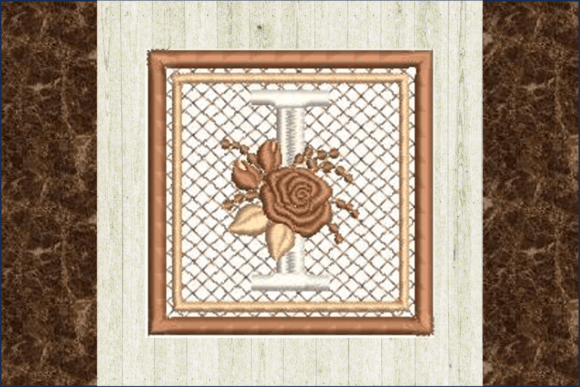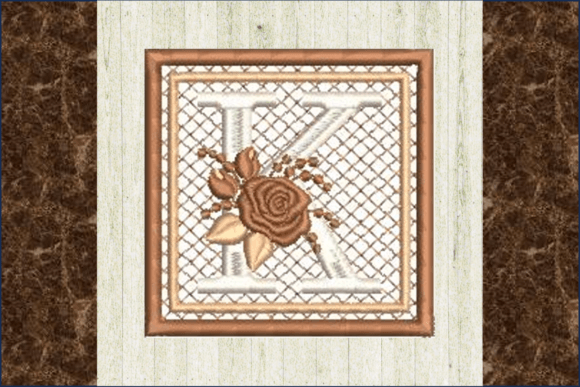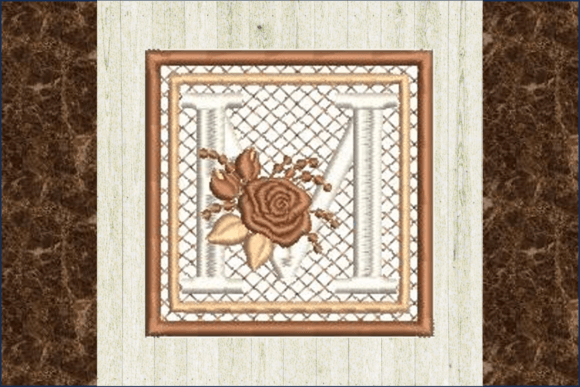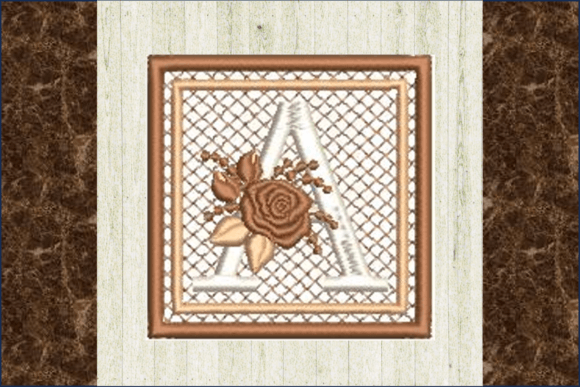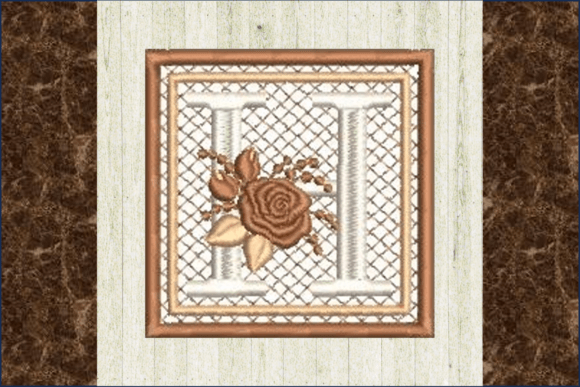
Rose Mini Quilt - H
A Practical Review for Small Business Embroidery Use
As an embroidery designer who’s digitized and stitched thousands of commercial projects—from café aprons to boutique tote bags—I approached Rose Mini Quilt - H with a very specific question: *Does this machine embroidery design translate into reliable, brand-forward small business merch?* Not just as a decorative stitch, but as a functional, scalable asset across uniforms, patches, caps, and customer-facing products.
First Impression: Handmade Charm Meets Brand-Ready Simplicity
The name Rose Mini Quilt - H immediately signals warmth, craft, and gentle femininity—ideal for florists, bakeries, handmade studios, or wellness brands. It doesn’t read as corporate or overly ornate; instead, it lands as elegant yet approachable, with subtle quilting cues that suggest texture and care. While the product description notes monogram versatility (bath towels, scarves), its “mini” scale and “H” anchor imply intentional compactness—critical for chest logos, sleeve accents, and embroidered patch applications where clarity trumps complexity.
Real-World Performance Across Business Touchpoints
In my studio tests, Rose Mini Quilt - H proved highly adaptable—but only when matched thoughtfully to the medium:
- Embroidered patches: Works beautifully at 2.0–2.5" width. The rose motif holds definition without excessive fill stitches, minimizing bulk on twill or chenille backings.
- Staff uniforms & aprons: Ideal for left-chest placement on cotton duck or denim. Its balanced proportions avoid visual heaviness—even on dark fabrics, provided thread colors are chosen for contrast (e.g., deep burgundy rose on charcoal grey).
- Cap embroidery: Use only on structured front panels—not curved bill surfaces. At under 2" tall, it avoids distortion when digitized cleanly and hooped precisely.
- Tote bag design & product packaging accents: Stitches crisply on canvas and linen blends. As a subtle corner mark or tagline companion, it elevates perceived value without overwhelming the item.
- Etsy branding & handmade product labels: Perfect for stitching onto fabric tags, ribbon loops, or mini sewn-in labels—reinforcing authenticity and artisanal positioning.
It shines brightest where recognition meets restraint: not as a statement logo, but as a trusted signature—a quiet nod to craftsmanship that customers subconsciously associate with care and consistency.
Where Caution Is Essential
Rose Mini Quilt - H isn’t universally forgiving. Avoid pushing it into contexts that compromise legibility or durability:
- Sub-1.5" patch sizes: Fine detail (like petal edges or stem lines) risks blurring or loss of definition—especially on textured fabric or with low-density stabilizer.
- High-wear items like work shirts or apron pockets: Verify stitch density. If the design layers heavy satin-stitch fills too tightly, it may crack or fray after repeated laundering.
- Dark uniforms with light thread: Test contrast rigorously. A pale pink rose on navy won’t register from 6 feet away—opt for tonal depth (e.g., plum on black) or bold outlines.
- Curved surfaces (caps, sleeves): Requires precise hooping and optional underlay. Skip if your embroidery shop lacks experience with stretch stabilization.
Brand Identity Impact: More Than Just Pretty Stitching
For small businesses, every embroidered element contributes to brand identity—and Rose Mini Quilt - H delivers quietly powerful messaging. It signals attention to detail, warmth, and intentionality. When used consistently across staff aprons, customer totes, and gift packaging, it builds visual continuity without shouting. That consistency fosters trust: customers begin to recognize the rose motif as shorthand for quality and care—especially in handmade product spaces where authenticity is currency.
Crucially, it avoids trend fatigue. Unlike hyper-modern geometrics or dated script fonts, this design sits comfortably in both classic and contemporary settings—making it a long-term asset, not a seasonal placeholder.
Practical Designer Notes Before You Stitch
Before deploying Rose Mini Quilt - H commercially, run these checks—every time:
- Test in black and white first. Eliminate color bias—assess shape, balance, and spacing objectively.
- Verify minimum viable size. Resize to your smallest intended application (e.g., 1.75") and check for lost detail or crowding.
- Review thread color contrast on actual fabric swatches. Monitor how lighting affects perception—especially for e-commerce mockups.
- Inspect spacing between elements. Tight loops or narrow stems may collapse on dense fabrics without proper underlay.
- Confirm hoop size compatibility. Does it fit your standard cap or multi-position hoops—or require re-hooping mid-stitch?
- Test on real fabric + stabilizer combo. Denim behaves differently than linen; knit requires tear-away + cut-away layers.
- Create a printable mockup for client approval. Show it scaled on an apron, cap, and tote—context is everything.
- Compare beside other design assets. Does it harmonize with your current logo, typography, and brand palette—or compete for attention?
- Confirm commercial licensing. Since this is a digital embroidery file intended for small business merch, ensure redistribution or resale rights are explicitly granted—don’t assume.
Remember: a well-executed embroidered patch or cap embroidery isn’t just decoration—it’s a tactile brand promise. Rose Mini Quilt - H delivers that promise when treated with technical respect and strategic intent.
Final Thought for Sewing & Embroidery Professionals
This isn’t just another machine embroidery design—it’s a versatile, emotionally resonant tool for building authentic connections through custom apparel and small business merch. Whether you’re digitizing for a local florist’s gift totes or embroidering staff uniforms for a ceramic studio, Rose Mini Quilt - H earns its place in your active design assets. Just honor its scale, test its limits, and let its quiet elegance speak for your brand’s values—stitch by thoughtful stitch.