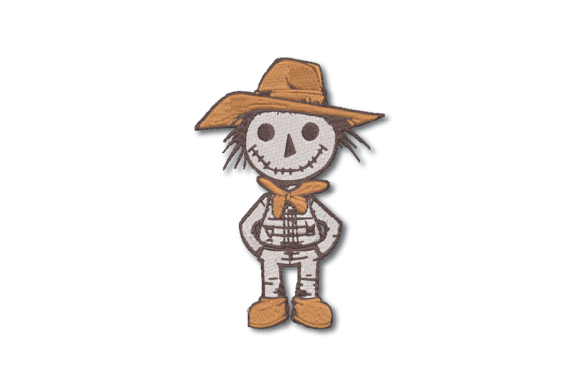
Scarecrow Embroidery Design Review
A Rustic-Whimsical Brand Asset for Small Business Merch
As an embroidery designer who’s developed hundreds of commercial designs for cafés, boutiques, florists, and handmade brands, my first impression of Scarecrow is immediate: it reads as warm, approachable, and intentionally handmade—not cartoonish or overly literal. The title alone evokes autumn charm, quiet storytelling, and a gentle nod to rural authenticity. That’s rare in Halloween-themed embroidery files, which often skew either spooky or juvenile. Scarecrow lands squarely in the sweet spot for small business merch: friendly enough for a pet bakery’s apron, distinctive enough for a craft studio’s tote bag design, and refined enough to hold up beside premium packaging or boutique product labels.
Where Scarecrow Shines in Real Business Applications
This machine embroidery design excels where personality meets practicality. On staff aprons for a seasonal café or flower shop, Scarecrow adds narrative warmth without sacrificing professionalism—its balanced proportions and clear silhouette read cleanly at 3–4 inches wide. As an embroidered patch sewn onto denim jackets or canvas totes, it communicates craft and care; customers instinctively associate that hand-stitched sensibility with quality handmade product lines. For cap embroidery on front panels, its centered composition and moderate height (assuming standard digitizing) avoids distortion on curved surfaces—especially when paired with lightweight stabilizer and medium-weight twill.
Small businesses using custom apparel for events or local markets will find Scarecrow highly versatile: it scales well for sleeve accents on work shirts, chest logos on flannel uniforms, or even subtle back-neck embroidery on kids’ smocks for a family-run farm stand. Etsy sellers consistently report stronger engagement when their digital embroidery file includes visual cohesion across product types—and Scarecrow supports that. Use it alongside a matching monogram or minimalist tagline to build consistent design assets across aprons, tote bags, and branded gift tags.
Smart Placement & Practical Limits
Like any strong embroidery file, Scarecrow demands thoughtful placement—not every surface is equal. Avoid applying it below 2.5 inches wide on patches unless you’ve tested stitch density and thread clarity at that scale. Tiny details (like straw texture or button eyes) may blur or “fill in” on dense fabrics like fleece or heavy canvas without proper underlay and stabilizer. On dark uniforms—especially black or navy—it’s essential to review thread color contrast: light tan or oat-colored threads may recede unless paired with crisp white or cream outlines.
Cap fronts and curved tote handles require extra attention. Always run a test on actual fabric before bulk production. If the original digitizing includes tight internal curves or fine linework, those elements may not translate cleanly on stretchy knits or textured burlap-style totes. And while Scarecrow fits naturally within the Halloween category, its timeless rustic tone means it works year-round—no need to limit it to October. In fact, over-relying on seasonal context can dilute long-term brand identity.
How Scarecrow Strengthens Your Brand Identity
For small business owners, every embroidered detail shapes perception. A well-executed Scarecrow says “we pay attention to craft,” not just commerce. It elevates perceived value—customers are more likely to trust a bakery that embroiders its logo onto linen napkins than one that prints it on paper tags. That consistency builds recognition: when your florist’s delivery tote, staff apron, and customer thank-you card all echo the same visual language, you’re reinforcing brand identity without saying a word.
It also supports buyer engagement. Handmade product shoppers respond to tactile authenticity—and an embroidered patch feels inherently more personal than a printed sticker. When used thoughtfully, Scarecrow becomes part of your story: the scarecrow guarding your harvest, your shop’s quiet mascot, the symbol of grounded creativity. That emotional resonance translates directly into repeat purchases, social shares, and word-of-mouth referrals.
Essential Designer Notes Before You Stitch
- Test in black and white first. This reveals balance, spacing, and legibility—critical for commercial embroidery where color choices depend on client branding.
- Check minimum viable size. Run a 2-inch version on scrap fabric to confirm no critical detail collapses. If the original file lacks a small-patch variant, consider simplifying outlines before scaling down.
- Review thread color contrast carefully. Especially on dark or textured fabric—what looks rich on screen may vanish on garment.
- Inspect spacing between elements. Overly tight gaps between stitched sections can cause puckering or thread breaks during high-speed runs.
- Confirm hoop size compatibility. Ensure your frame or machine accommodates the design’s largest dimension—especially if planning large tote bag designs or full-apron layouts.
- Always test on real fabric. Denim behaves differently than cotton poplin; fleece requires different tension and stabilizer than twill.
- Use appropriate stabilizer. Tear-away works for stable wovens; cut-away is essential for knits or frequent-wash items like aprons and staff uniforms.
- Create a printable mockup for client approval. Visual alignment matters—show how Scarecrow sits beside your existing logo, typography, or packaging.
- Compare it beside other design assets. Does it harmonize with your current palette, line weight, and overall aesthetic? Consistency builds trust.
- Verify commercial licensing. Since this is a digital embroidery file intended for small business merch, confirm usage rights cover resale, promotional use, and client projects before committing to production.
Ultimately, Scarecrow isn’t just another Halloween embroidery file—it’s a flexible, brand-forward tool for small business owners who understand that thoughtful detail separates memorable merchandise from forgettable swag. Used with intention, it reinforces craftsmanship, deepens customer connection, and quietly signals that your business values both story and stitch.