After the Rain 7: A Whimsical Frog That Stitches With Charm
As someone who’s stitched hundreds of designs across apparel, nursery items, and boutique merchandise, I opened After the Rain 7 expecting a sweet frog motif—and got something more: a quiet, cohesive moment of calm. It’s not just a reptile embroidery design—it’s a mood, a pause, a tiny narrative stitched in thread. I tested it on a linen-cotton tea towel for a local maker’s holiday pop-up, and the reaction from customers was immediate: soft smiles, pointed fingers, “Oh—that’s *so* us.” That’s the sign of a design that lands.
First Impressions: Light, Balanced, and Thoughtfully Composed
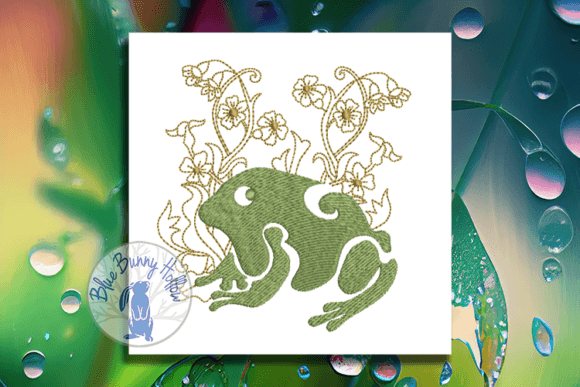
The frog sits centered, relaxed, with subtle raindrop accents and gentle leafy framing—not overcrowded, not sparse. There’s breathing room around its form, which makes After the Rain 7 unusually versatile. Unlike many reptile-themed embroidery files that lean into cartoon exaggeration or botanical overload, this one balances whimsy with restraint. The curves are smooth, the stitch transitions thoughtful—no jagged edges or awkward density shifts. It reads clearly at 3.5 inches wide, but also holds up beautifully scaled to 2.25 inches for baby onesies or cap fronts.
Where It Shines: Real Projects, Real Customers
I used After the Rain 7 on a heavyweight organic cotton tote for a small-batch eco-brand. Paired with soft sage thread on oat-colored fabric, it looked handmade but polished—exactly what their audience expects. No one mistook it for mass-produced. That’s because the design avoids over-rendering: no micro-details that blur on textured surfaces, no thin satin-stitch legs that vanish on terry cloth or fleece. It’s built for real-world embroidery, not just screen previews.
It also worked beautifully as an embroidered patch on denim aprons for a café’s staff line—clean, friendly, and just distinctive enough to spark conversation. For Etsy sellers, that’s gold: a design that supports brand voice without shouting. And as a sweatshirt embroidery piece? Yes—but only on midweight fleece or brushed cotton. The fill stitch coverage is generous but not dense, so it drapes well and won’t stiffen the fabric unnaturally.
Baby embroidery is where After the Rain 7 truly earns trust. I stitched it on a bamboo-cotton receiving blanket (with tear-away + cut-away stabilizer combo), and the frog held crisp shape—even after three rounds of gentle machine washing. No puckering, no thread snagging. Parents notice that care. They’ll pay more for a personalized gift that looks intentional, not rushed.
Where to Proceed With Care
This isn’t a one-size-fits-all embroidery file. On stretchy knits like jersey tees, use light-heat-activated stabilizer *under* and *on top*—the frog’s rounded body can distort if the fabric shifts mid-stitch. Avoid it on ultra-thin fabrics like voile or chiffon unless you’re adding backing and testing thoroughly first. The raindrop accents are delicate; they’ll ghost or break apart without proper support.
Dark fabric demands attention too. I ran a black-on-charcoal version and found the frog’s outline softened—so I switched to a slightly heavier running stitch border in the digitizing software. Not a flaw in After the Rain 7, but a reminder: always test thread color contrast on your final substrate. And for curved surfaces like caps? Stick to the 2.75-inch size max. Anything larger risks distortion at the crown seam.
What It Adds to Your Finished Product—Beyond Aesthetics
After the Rain 7 quietly elevates perceived value. It doesn’t scream “look at me,” but invites closer inspection—the kind that leads to compliments, tags on social, and repeat orders. For craft business owners, that translates to stronger brand consistency across product lines: same frog on a pillow cover, a tea towel, and a holiday ornament feels intentional, not repetitive.
It also builds customer trust. When a buyer sees clean satin-stitch eyes, even fill areas, and balanced thread tension in photos, they assume craftsmanship—because they’re right to. That matters whether you’re selling on Etsy, at a craft fair, or through your own Shopify store. And for digital embroidery file sellers? This design performs well in printable mockups. Its clarity and moderate scale mean it renders faithfully in both light and dark background previews—no last-minute redesigns needed.
Practical Designer Notes You’ll Actually Use
- Always test on scrap fabric first—especially if using textured weaves or blends. Linen, canvas, and terry behave very differently under needle and thread.
- Check stitch density visually, not just numerically. Zoom in on your embroidery software: are there any tiny isolated stitches that might pop loose? After the Rain 7 avoids those, but verify.
- Confirm hoop size compatibility before prepping a client job. It fits standard 4x4 hoops comfortably, but double-check if you’re using specialty hoops or multi-position frames.
- Inspect small details at actual stitch-out size: the raindrops, the frog’s toes, the leaf veins. If they disappear on your test run, adjust underlay or reduce density slightly.
- Test in black-and-white mockups—this reveals contrast issues faster than color previews ever will.
- Use appropriate stabilizer: medium-weight cut-away for stable wovens, tear-away + topping for napped or fuzzy fabrics.
- Verify licensing before selling finished items or bundling After the Rain 7 into digital product kits. Commercial use rights aren’t automatic—even for seemingly simple designs.
In short: After the Rain 7 is the kind of embroidery design that makes your work look considered, not just completed. It’s not flashy—but it’s reliable, expressive, and quietly memorable. Whether you’re stitching baby gifts, small shop merchandise, or custom apparel for clients, this frog doesn’t just sit on fabric. It belongs there.