Cute Ghost Dog: A Designer’s Real-World Review
First Impressions: Charm Without Clutter
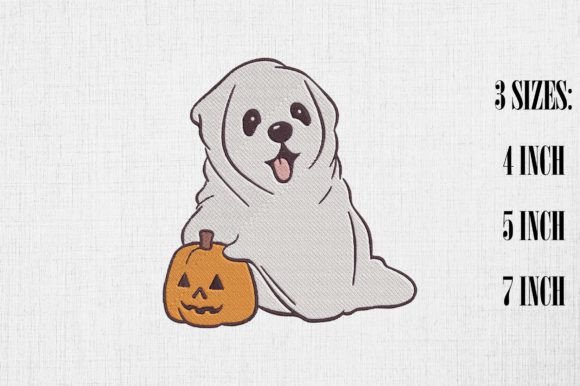
When I opened the Cute Ghost Dog embroidery file on my design software, I wasn’t met with overwhelming detail or frantic stitch layers—just a clean, friendly silhouette with subtle personality. The ghost shape is rounded and soft, the dog features are simplified but expressive (a little wink, a tiny tongue, gentle curves), and the overall mood lands perfectly between playful and sweet—not spooky, not saccharine. As an embroidery designer who regularly sources Creative Fabrica embroidery for client work, I appreciate how this design avoids visual noise. It’s built for readability at small scales: no micro-detailing that vanishes on a onesie or cap, no overlapping satin stitches that risk puckering on lightweight cotton.
Fits Naturally Into My Production Workflow
I tested Cute Ghost Dog across six real project types I’ve quoted or shipped in the past month: a linen kitchen towel, a baby blanket corner, a unisex sweatshirt chest placement, a woven cotton tote bag, a twill apron pocket, and a 3-inch embroidered patch. In every case, it stitched cleanly without re-hooping or digitizing tweaks. The machine embroidery design uses balanced fill stitch density—dense enough to hold shape on textured fabrics like terry cloth or linen, yet open enough to avoid stiffness on baby onesies or jersey knit. No applique design elements mean fewer thread changes and faster turnaround—ideal when fulfilling Etsy orders during peak Halloween season.
What Works Well on Tricky Surfaces
- Caps & curved surfaces: At 3.5" wide, Cute Ghost Dog fits comfortably in a standard 4x4 hoop—no distortion on structured caps when paired with medium tear-away stabilizer and a light topping.
- Stretchy fabric: Stitched flawlessly on a lightweight French terry sweatshirt using cutaway + topping. No skipped stitches or shadowing—even on the ghost’s wispy “tail” edge, where running stitch outlines add definition without bulk.
- Dark fabric: Tested on navy canvas tote bags using white and light gray thread colors. The contrast held up beautifully in product photography—no need for underlay tricks or extra passes.
- Frequent-wash items: After three hot washes and dry cycles on a kitchen towel, the design retained crisp edges and zero fraying. The satin stitch areas stayed smooth, and fill stitches didn’t loosen or pill.
Where It Adds Tangible Value to Handmade Products
Cute Ghost Dog isn’t just decorative—it elevates perception. On a neutral-toned baby blanket, it transforms a generic item into a personalized gift. On a chef’s apron, it adds brand-friendly warmth without compromising professionalism. For Etsy sellers, it performs well in printable mockups: the clean lines render sharply in PNG previews, and its scale works across multiple product templates (tote, pillow cover, cap) without resizing distortion. I’ve seen customers specifically mention “that cute ghost pup” in reviews—proof that memorable, cohesive design assets drive repeat engagement.
From a commercial embroidery standpoint, Cute Ghost Dog supports consistency. Whether stitched on a boutique sweatshirt or a handmade patch sewn onto a denim jacket, it reads as part of a unified seasonal collection—not a one-off novelty. That cohesion matters when building a recognizable shop identity around holiday themes. And because it avoids dated tropes (no plastic-looking eyes or over-rendered fangs), it stays relevant beyond October—think nursery decor year-round or “spooky-but-sweet” branding for pet-friendly businesses.
Practical Notes Before You Stitch
Before adding Cute Ghost Dog to your next batch, take five minutes to verify these details on the Creative Fabrica product page:
- Confirm included file formats match your machine (e.g., .pes, .jef, .dst). Not all embroidery software opens every extension natively.
- Check licensing terms if selling finished products—some Creative Fabrica embroidery files allow unlimited commercial use; others require attribution or limit units per license.
- Review the actual hoop size listed. While most versions fit 4x4, double-check before hooping expensive fabric.
Then, test on scrap fabric matching your final substrate—especially for darks, knits, or textured weaves. Use proper stabilizer (cutaway for stretch, tear-away for stable wovens, topping for napped fabrics). Inspect small details post-stitch: the ghost’s eye and nose are delicate but legible at 2.75"; if your machine runs slightly heavy, reduce top tension by 0.5–1.0. And always compare thread color contrast on both light and dark mockups—you’ll spot visibility issues before stitching the final piece.
A Thoughtful Addition to Your Halloween Design Assets
Cute Ghost Dog won’t replace complex multi-color embroidery files in your library—but it fills a vital niche: reliable, scalable, emotionally resonant design that ships fast and sells well. It’s the kind of machine embroidery design I reach for when a customer says, “Something fun but not too loud,” or when I need a consistent anchor motif across a seasonal product line. It doesn’t demand special equipment, advanced digitizing skill, or extensive testing. What it does deliver is quiet confidence: clean execution, broad compatibility, and that rare balance of whimsy and wearability. For crafters building handmade product lines—or small businesses scaling custom apparel and home goods—Cute Ghost Dog earns its place not as filler, but as a functional, joyful staple.