Vampire Halloween Face
First Impression: Haunting, Intricate, and Instantly Seasonal
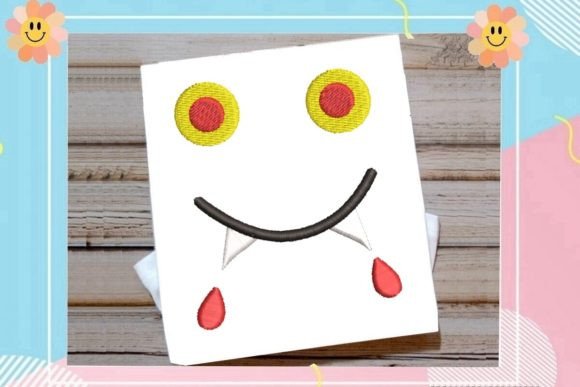
As an embroidery designer who’s prepped over 200 craft fair booths—from snowy winter markets to sun-drenched summer fairs—I opened Vampire Halloween Face expecting theatrical flair. What I got was sharper: a machine embroidery design that balances eerie elegance with wearable charm. It doesn’t lean into cartoonish kitsch or gothic overload—it feels *intentional*. That “mysterious allure” in the description isn’t marketing fluff. The motif reads as haunting at arm’s length but reveals delicate line work up close: subtle shading in the cheekbones, fine stitch definition around the eyes, and controlled negative space that keeps it from feeling heavy. For craft fair buyers scanning a crowded table, this isn’t background noise—it’s a quiet stop-and-look.
Where Vampire Halloween Face Shines on Real Craft Fair Products
This design thrives where personality meets practicality. On a natural canvas tote bag? Perfect—centered above the pocket or scaled slightly smaller near the hem, it adds boutique-level intrigue without overwhelming. As apron embroidery? Ideal for the chest pocket or upper left corner: bold enough to catch light under market tent lighting, detailed enough to reward closer inspection (and encourage conversation). For tea towel embroidery, place it just below the hanging loop—its vertical orientation and balanced proportions hold beautifully against linen or cotton terry texture.
It also excels as an embroidered patch: clean outer edges, no stray satin-stitch bleed, and strong internal contrast make it peel-and-stick ready or sew-on versatile. On structured fabric pouches or small drawstring bags, Vampire Halloween Face becomes a collectible detail—small enough for impulse buys, distinctive enough to stand out among generic pumpkins and bats. Pillow covers? Yes—but keep it centered and sized to 4–5 inches wide; any larger risks losing nuance on plush fabrics. And for caps? Use only on front panels of structured, medium-crown styles—avoid curved bill surfaces unless you’ve tested hoop clearance and stitch tension first.
What Makes It Sell—Beyond the Spook Factor
- Instant readability: No decoding needed. Even at 3 feet, customers recognize “vampire” + “Halloween” + “handmade quality” in one glance.
- Strong booth display strength: Paired with black, deep plum, or charcoal fabrics, it creates visual rhythm next to softer motifs—think: a row of three tea towels showing bat, cat, and Vampire Halloween Face as your premium anchor.
- Etsy listing advantage: Photographs cleanly against neutral backdrops. Its intricate details translate well in printable mockups—no blurry edges or pixelated shadows to edit out.
- Batch-friendly execution: Repeats cleanly across product lines. Once you dial in stabilizer and thread colors, it scales reliably from patches to pillow covers without redesign.
Careful-Use Notes Every Embroidery Designer Should Flag
This isn’t a “hoop-and-go” file. Its “intricate details” demand attention before cutting fabric:
- Avoid dense stitch areas on textured towels—test on scrap terry first. Excessive density can flatten pile or cause puckering.
- Don’t shrink Vampire Halloween Face below 2.75 inches wide. Tiny eyes and mouth details blur fast—especially on dark fabric where thread contrast drops.
- Thick fabrics (like denim aprons or canvas market bags) need cutaway stabilizer—not tear-away—to support fine interior stitching.
- On curved cap fronts, confirm hoop size fits your embroidery arm clearance—and reduce stitch density by 5–8% if your machine flags tension warnings.
- Thread colors matter more here than on simpler motifs. A flat black thread on black fabric will vanish. Opt for matte charcoal or deep burgundy for dimension.
How It Elevates Your Handmade Product Line
Vampire Halloween Face doesn’t just decorate—it differentiates. In a sea of mass-produced Halloween decor, this machine embroidery design signals craftsmanship: careful digitizing, intentional spacing, and respect for fabric behavior. Customers don’t just buy a spooky tote—they buy a story, a mood, a handmade product with curated intent. That lifts perceived value, supports higher price points, and strengthens brand consistency across your small shop product range. At the craft fair, it becomes your “hero sample”—the piece people point to, ask about, and remember your booth name after.
Essential Embroidery Designer Prep Steps
- Test the embroidery file on scrap fabric matching your final product’s weight and texture.
- Check thread contrast—especially on dark or heathered fabrics—using actual spools, not screen previews.
- Review spacing between facial elements: tight gaps (like between fangs and lips) must clear your machine’s minimum jump distance.
- Confirm hoop size compatibility—don’t assume standard 4x4 fits if inner stitch layout is tall and narrow.
- Inspect stitch density in the eyes and hairline—overly dense areas trap moisture and stiffen hand-feel.
- Use appropriate stabilizer: cutaway for stretchy knits, medium-weight tear-away for stable cottons, fusible for lightweight linens.
- Create at least one real-world mockup—not just a digital preview—before committing to full production.
- Compare how Vampire Halloween Face looks on light vs. dark fabric swatches side-by-side under natural and booth-style lighting.
- Verify commercial licensing terms before selling finished products—this is non-negotiable for Etsy sellers and boutique makers.
Final Thought: A Design That Works as Hard as You Do
Vampire Halloween Face is more than a seasonal embroidery file—it’s a strategic craft fair asset. It draws eyes, invites touch, photographs well, repeats cleanly, and carries emotional resonance without leaning on cliché. When stitched right, it turns everyday items into heirloom-adjacent gifts and transforms your booth from “nice” to “unforgettable.” Just remember: its haunting charm depends entirely on your prep. Test. Compare. Stabilize. Then let the mysterious allure do the rest.