Rat Head Embroidery Design Review
First Impression: Playful Charm Meets Professional Craftsmanship
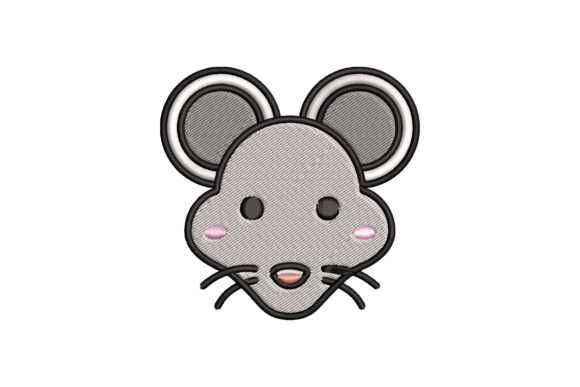
As an embroidery designer who’s developed and tested hundreds of machine embroidery designs for small business merch, my first read on Rat Head is immediate and telling: it lands as playful, approachable, and intentionally charming—not cartoonish or overly cutesy. The title alone signals a confident nod to the Wild Animals category while avoiding cliché; it suggests personality over literalism. That matters when you’re building brand identity through custom apparel or embroidered patches. For a boutique florist, indie pet brand, or quirky café, Rat Head doesn’t scream “costume”—it whispers “character with care.” Its described “adorable charm and intricate” detail hints at thoughtful line work and balanced stitch density—not just fill-heavy fluff. That’s promising for real-world durability and visual clarity.
Real-World Business Use: Where Rat Head Shines
Rat Head performs exceptionally well across high-impact small business applications. As an embroidered patch, it holds strong definition at 2.5"–3.5" sizes—ideal for tote bag corners, apron pockets, or sleeve accents on staff uniforms. On caps, it reads cleanly on front panels when digitized with optimized underlay and reduced satin-stitch tension (more on that below). For cafés and bakeries using linen aprons or cotton twill work shirts, Rat Head adds handmade product warmth without sacrificing polish. It also scales beautifully into printable mockups for Etsy sellers previewing branded merchandise—customers instantly grasp its friendly, memorable silhouette.
In boutique merchandise, Rat Head works double duty: as a chest logo on unisex tees, it conveys craft and individuality; as a subtle back-neck accent on kids’ totes or reusable produce bags, it builds quiet brand recognition. Local studios and creative agencies use it in limited-run event merch—think festival staff caps or vendor booth banners—where authenticity and visual cohesion matter more than corporate sterility.
Careful Application Zones: Know the Limits
Like any quality embroidery file, Rat Head demands context-aware execution. Avoid placing it smaller than 1.75" on curved surfaces like cap fronts unless you’ve confirmed its digitization handles distortion gracefully. High stitch density areas—especially around eyes or whisker outlines—can blur on textured fabric (e.g., heavy canvas totes or looped terry cloth) without proper stabilizer selection. Dark uniforms require careful thread color contrast testing: a warm charcoal rat head on navy may vanish without a subtle outline or tone-on-tone highlight.
Also note: frequent washing weakens fine details. If your small business merch includes employee aprons or reusable bags meant for daily laundering, confirm the design avoids ultra-thin satin borders or micro-fill zones. And never assume tiny lettering is included—Rat Head is a standalone motif, not a wordmark. Pair it thoughtfully with clean sans-serif text if branding requires name integration.
Brand Identity Impact: More Than Just Cute
Used intentionally, Rat Head elevates perceived value—not by looking expensive, but by looking *considered*. Customers associate well-executed embroidered patches and apron embroidery with attention to detail and artisanal integrity. A bakery using Rat Head on bakers’ caps signals pride in craft, not gimmickry. A pet brand applying it to collar tags or treat bag closures reinforces empathy and playfulness—traits buyers trust in animal-focused businesses. Visually, it supports consistency: whether stitched on a tote, a cap, or a product packaging accent, the core shape remains recognizable across touchpoints. That repetition builds recall faster than abstract logos for small audiences.
Practical Designer Notes Before You Stitch
Before committing Rat Head to commercial embroidery production, follow these field-tested steps:
- Test in black and white first. Print or view the embroidery file grayscale to assess contrast, spacing, and silhouette integrity—no color distractions.
- Verify small-patch viability. Resize digitally to 2" and inspect for lost detail, especially in whiskers or ear contours.
- Review thread color options. Try matte cottons versus high-sheen poly—sheen changes perceived intricacy on dark fabrics.
- Check spacing between elements. Tight gaps between features may collapse on low-tension machines or unstable fabric.
- Confirm hoop size compatibility. Does Rat Head fit comfortably within your standard 4x4 or 5x7 hoop? Oversized files increase rehooping risk on production runs.
- Test on real fabric. Run a sample on your most common substrate—canvas, twill, denim, or lightweight cotton—to gauge stitch lay, pull, and stabilizer need.
- Use appropriate stabilizer. Tear-away for stable wovens; cut-away for knits or stretchy blends; mesh for lightweight silks or linens.
- Create a client-facing mockup. Embed Rat Head into a realistic tote bag or cap template before final approval—visuals prevent costly rework.
- Compare beside existing design assets. Does it harmonize with your current font system, color palette, or other icons?
- Confirm commercial licensing. Ensure your digital embroidery file permits resale, branded merchandise, and small business distribution—don’t assume personal-use terms cover Etsy shops or wholesale.
Remember: Rat Head isn’t just another Wild Animals embroidery design—it’s a versatile, personality-driven asset. When treated with professional digitizing awareness and strategic placement, it transforms everyday items into cohesive brand statements. Whether you’re launching a handmade product line, outfitting a team, or designing customer gifts, this embroidery file delivers charm with intention—and that’s exactly what small business merch needs to stand out, stay memorable, and feel authentically yours.